
Unit 6: Complaints

What's the point of complaining?
By the time you know you have received poor advice or poor service, the damage has often been done, and there may be no easy way back from it. So why complain, if it is not going to change the outcome?
There are still some practical reasons:
- To get a refund
- To get compensation
- To recover documents
There is also a reason that is more closely tied to the outcome:
- To get a written apology or other document confirming a mistake was made
Such a document might be useful in future applications or claims.
These are the 'selfish' reasons for complaining. Perhaps more important than all of these is the 'selfless' reason:
- To protect others from:
- Poor advice or poor service
- Unregulated advice
Who to complain to
This is where things can start to get a little confusing, due in part to the proliferation of regulators, and the existence of other possible avenues for complaint. Broadly speaking we have:
- The adviser or the adviser's firm
- The IAA
- Other regulators, and
- The Legal Ombudsman (or there equivalent in Scotland or Northern Ireland)
Who you complain to, and in what order, depends a little on circumstances, and on what you want to get out of it:
- Your adviser can apologise, admit to a mistake, take corrective action and/or offer refunds
- Their regulator can take action against an adviser (e.g. cancel or suspend regulation in the most serious cases)
- The Legal Ombudsman, can order advisers to apologise, issue refunds, return documents, and/or pay compensation, and can also refer cases on to the relevant regulator
However the Legal Ombudsman has no jurisdiction over IAA-regulated advisers, who are not part of the 'traditional' legal profession.
How to complain
Broadly speaking, the procedures fall into three categories:
- Unregulated advisers
- IAA regulated advisers
- Other legal professionals (solicitor's, barristers, etc.)
Unregulated Advisers
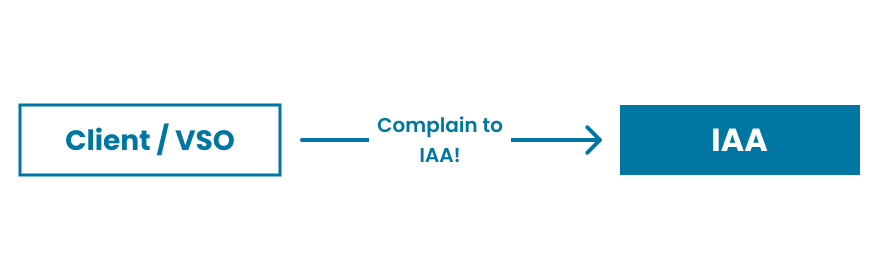
This is the simplest of all scenarios. Unregulated immigration advice is inherently criminal, so any instance of unregulated advice should be reported directly to the IAA. There is no need to approach the adviser or the adviser's firm first - in fact this is generally to be avoided!
You can report unregulated advisers by e-mailing the IAA on info@immigrationadviceauthority.gov.uk.
IAA Regulated Advisers
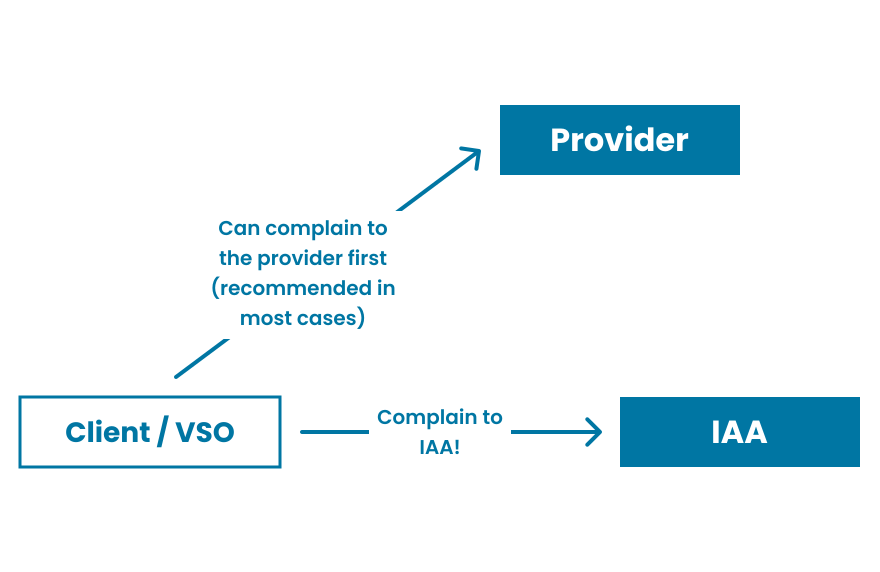
It will usually be appropriate to complain to the adviser or their firm directly in the first instance, allowing a reasonable opportunity for them to respond. A letter setting out the substance of the complaint should suffice for this purpose. If dissatisfied with the response you would still have the opportunity to complain directly to the IAA.
The IAA will take complaints directly without requiring you to complain to the adviser, although they may recommend doing this first. The IAA cannot order refunds or compensation. However they can suggest to a firm that a refund may be appropriate, and they can take into account a firm's response to any complaints when considering whether any further action is required. In extreme cases, they can end a firm's regulation.
The procedure for complaining to the IAA is available on their website.
If you try to complain to the Legal Ombudsman about an IAA regulated adviser the Ombudsman will refer the complaint to the IAA.
Solicitors and Other Legal Professionals
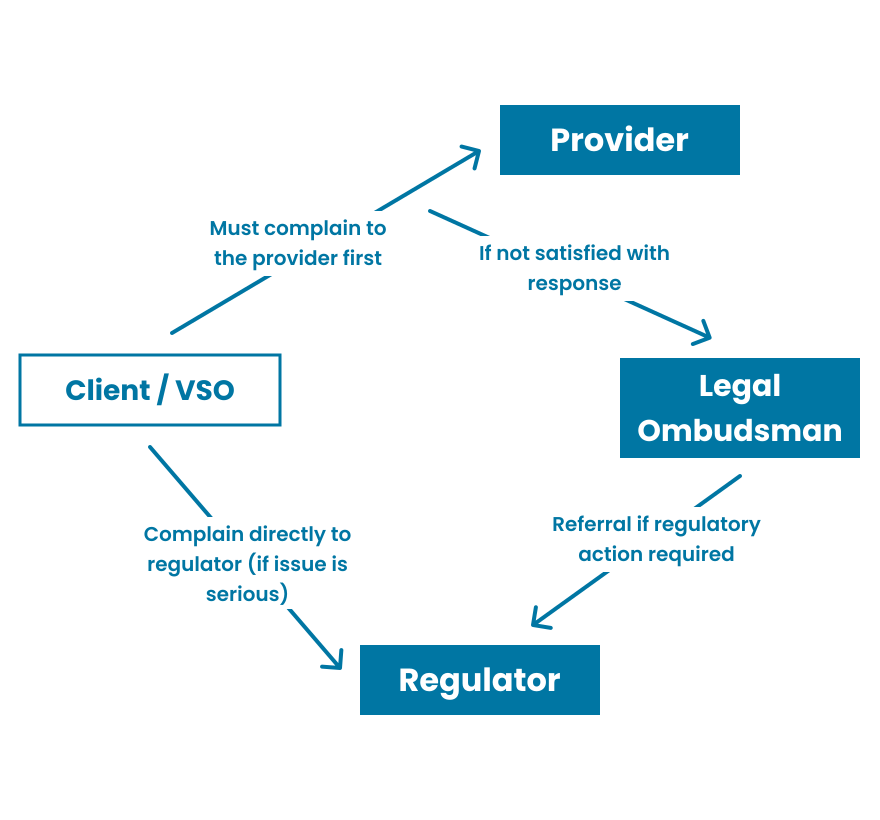
Complaints about legal professionals can be made to the Legal Ombudsman. However the Legal Ombudsman requires that the complaint be made to the adviser (or their firm) first, and that they be allowed up to eight weeks to respond. Only when you are dissatisfied with the response or have waited eight weeks without a response can you put your complaint to the Ombudsman to investigate.
Details of how to complain are available on the Legal Ombudsman's website.
If the issue is very serious - for example if you believe the adviser poses a threat to others in continuing to practice, then you may wish to take your complain directly to the adviser's regulator so that the regulator can consider whether any action is required. This will not benefit you directly, but it may help to protect others.
What if the client does not want to complain?
To make a complaint, you need your client's consent. In many cases clients may not want to complain, or may be fearful of complaining despite your best efforts to allay their fears. This is their right.
If it's just a matter of indifferent service or an issue that is unique to the client, then this isn't a major problem. However it you think that others may be at risk it is important not to let the matter rest.
If you think someone is giving unregulated advice, you may still be able to report them to the IAA, without giving details of your client, provided the unregulated adviser cannot easily tell which client's actions led to the report. However it will not be possible for the IAA to prosecute if they do not have a witness who can corroborate details of the offence.
If a regulated adviser is behaving in a reckless manner and putting clients at risk, then you may be able to gather intelligence on this. For example, you could maintain a list, file or database of significant problems that clients have with their adviser that would enable you to monitor the situation, identify recurring problems and even collate statistics.
You can then pass on limited information to the appropriate regulator. You would need to filter the information to ensure clients could not be identified should the details reach the adviser in question.
Regulators have powers to enter the premises of the advisers they regulate, and to audit their files. They do not require proof of poor practice to take this kind of action. This enables them to act on intelligence of serious or recurring problems with an adviser.